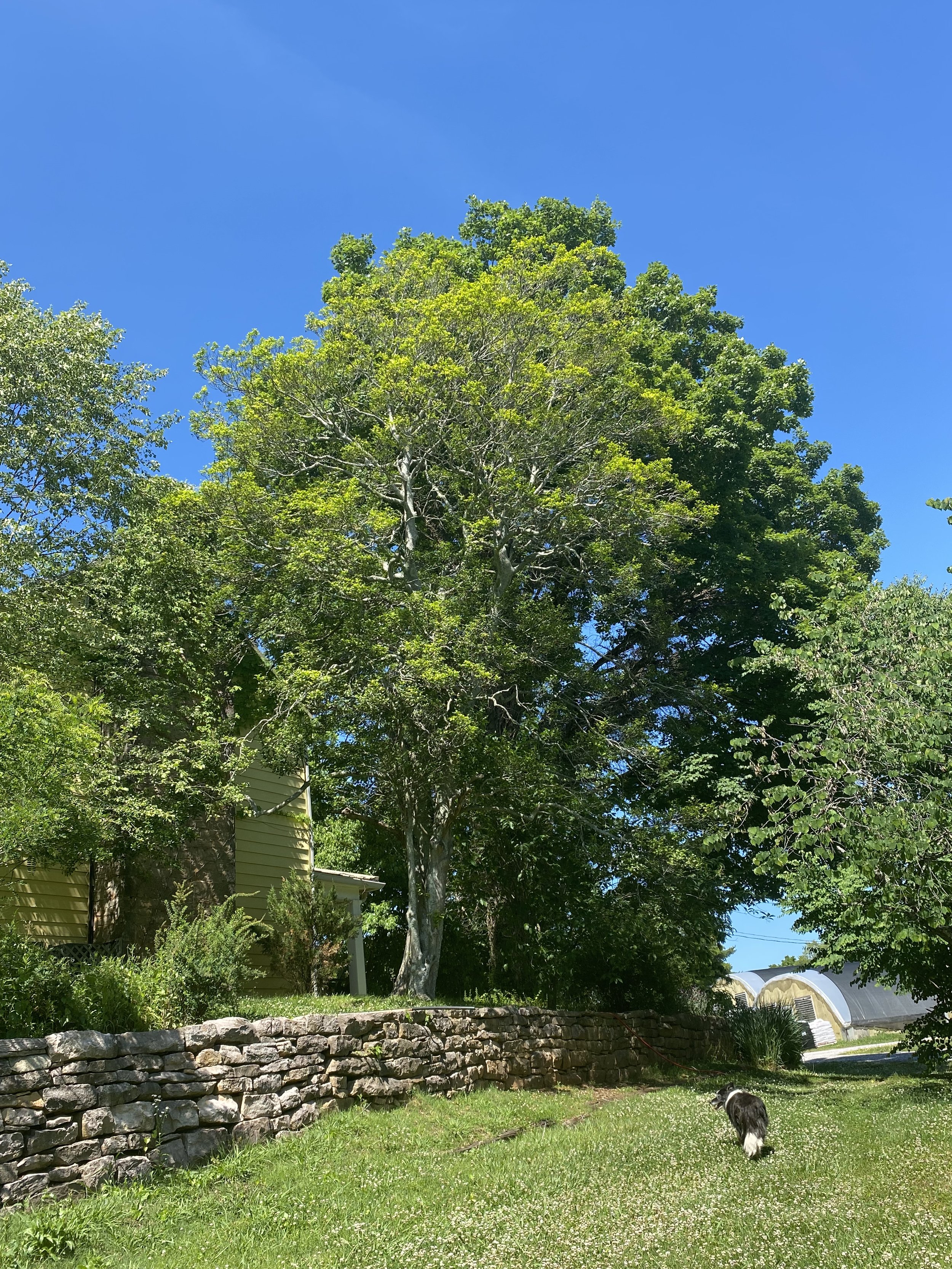
It's Tree Time In Tennessee!!! (& football too)
Abby Stanley
In case you haven’t heard, fall is the best time to plant trees, shrubs, and larger/permanent plant material. Why? Because this gives the most amount of time for the plant’s roots to get established before the heat and stress of summer comes along. So, stick with me and we will talk about why you should plant trees, my favorites, and some tips for planting!
Why should you plant trees? They are big, “messy”, they could fall on your house any second!!! Honestly, very rare. If this has happened to you, I have complete sympathy! However, it truly isn’t as common as your local tree service wants you to think and the benefits of large trees far out way the negatives.
Trees provide oxygen. We breathe oxygen. The more trees on the planet, the lower pollution we have and that is a fact. So, regardless of what you believe, if you have the opportunity to plant a large tree, you’re impacting the world in a positive way, and hey isn’t that what we all want to do?! A single tree produces approximately 260 lbs. of oxygen per year. That means two trees can provide enough oxygen for a family of four. A mature tree removes almost 70% more pollutants than a newly planted one, so yes, the bigger the better. Trees absorb harmful chemicals, pollutants, and odors and then expel oxygen, which we need to survive. Talk about a win, win. One tree absorbs as much carbon in a year as a car produces while driving 26,000 miles.
You will save on your energy bill! Shading a home with well-placed trees can reduce summer air conditioning needs by up to 50 percent! Shading your outdoor air conditioning unit can increase its operating efficiency by up to 10 percent. Planting evergreen windbreaks on the north/north-west side of your home can shield your house from the winter cold. This wind protection lowers overall heating demands by 10 to 30 percent. We all know how expensive energy is and given these statistics that tree will pay for itself 10 times over before you know it.
Trees increase your property value! Trees have a 31.5-billion-dollar impact on home values annually nationwide. Your particular property could be increased by up to 20% by adding some large shade or evergreen trees to your property. I am always struck by old neighborhoods with towering trees, like Sequoyah Hills here in Knoxville. To me, the trees are what makes that neighborhood feel upscale, old, historic, and luxurious. Feeling surrounded by trees is a comforting feeling and could make you a lot more money if you ever sell your home.
Trees provide food and shelter for wildlife. When we have our butterfly festival in August, I always mention that trees are often the topmost valuable plants you can have for butterflies and caterpillars, which isn’t what you would think right? That is because many native trees provide a home or host for butterfly species. Our native white oak in particular, can support over 500 different species of lepidoptera (butterflies). 500!!!!! And that is just one insect species. Maybe that isn’t important to you, but the ecosystem we live in is fragile, and so interconnected. If one insect species declines or disappears it can affect the food web in ways we aren’t even aware of yet. It is our duty to do what we can as stewards on this planet to support abundance of life, even if only for our own sake.
Trees boost your physical and mental health! Many studies have noted that time in nature, specifically around trees, have decreased depression and anxiety. In Louisville, Kentucky, researchers have found that planting 9,000 trees throughout the city have improved the neighbor’s health conditions linked to heart disease, cancer, and stroke. Being in nature also keeps us healthier physically by encouraging movement and exercise. When you put that into the mix, nature can lower obesity rates and health issues associated with that as well.
Trees provide clean water! Trees and forests filter impurities, toxins, and chemicals out of our drinking water. A huge amount of the country gets their drinking water supply from national forests for this reason. This also cuts down on city resources by making the water cleaner to begin with. The ripple effects of a tree really are staggering when you think about it. You may think that your one tree can’t make that big of a difference, but if we all planted one tree this year, just think of the impact that would make. Every little bit counts on moving the dial to a healthier world, and a healthier us.
My favorite trees-
I hate to pick favorites, but in case you are wondering, here are some of my tops picks for trees in our area.
-Oaks! White Oak, Willow Oak (great for highly polluted areas/inner city), Pin Oak, Black Oak, Sawtooth Oak, Northern Red Oak, Southern Red Oak, etc. Oaks are the best overall trees in my opinion. They have a gorgeous, elegant habit, fantastic fall color, and provide so much for wildlife. Everyone should plant an oak!
-Maples! Sugar Maples (THE best tree for fall color, but we are a bit southerly, so maybe give some protection from PM sun if possible), Red Maple (October Glory and Brandywine are common varieties).
-Magnolia! Southern Magnolias are a staple. They are evergreen and produce gorgeous, fragrant blooms. Teddy Bear and Little Gem are more dwarf varieties if you want smaller. Sweetbay is a favorite native tree, stays smaller, in size similar blooms but smaller than southern) Tulip/Saucer Magnolias are truly magical in the spring.
-Willow! Ah the magic of a weeping willow. Plant away from the house, because they seek out water! Our weeping willows are actually descended from a tree that covered Napoleon’s grave (true story). Willows are a fantastic host plant to insect species and pollinators.
-Serviceberry- If you are looking for an alternative to Dogwoods that can be planted in the full sun, go with a Serviceberry! Or Redbud.. but serviceberry trees are fantastic. They produce delicious fruit similar to a blueberry; they have stunning red fall color and bloom white in the spring which attracts many pollinators.
-Tulip Poplar- I have to mention our state tree, the Tulip Poplar. These are great, fast-growing, sturdy trees that have a lovely vertical habit and interesting leaves, blooms. George Washington apparently loved them so much he had several planted on his plantation where they still stand to this day.
-Sycamore- possibly my 2nd favorite trees in our area are Sycamores. They have beautiful exfoliating bark that reveals a smooth white bark underneath with stands out in the forest or neighborhood, especially in the winter. These trees like water so moisture would be nice, but they aren’t as hungry as willows, so don’t worry about them being too close to your home.
-Shagbark Hickory- These trees also have exfoliating bark that peels off or stays on the trees giving them a sinister and unique look. These “shags” can be habitat for native bat species and other critters needing protection, not to mention the hickory nuts they produce are great for wildlife.
-Deodar Cedar- straying away from all natives here.. Deodar Cedars are one of my favorite evergreen trees. Their blue-green needles are clustered in balls on the stems of the tree, which is very unique. They have a lovely, exotic look to them that adds interest to your landscape.
-Japanese Maple- also another tree that everyone should have possibly. They do not provide much for wildlife, but they come in about any size/shape and color available in the tree world. They are an instant upgrade for your landscape and become a focal point in every garden.
-Eastern Redbuds- also a good alternative to Dogwoods. Redbuds can handle full sun, have cute heart shaped leaves, produce bright yellow fall color, and flower purple in early spring. Redbuds are unique in that they flower on the tree stems and even bark instead of coming out of nodes like most trees.
Tips for planting-
Amend your soil! This is so huge. We are prone to clay here and clay for a plant’s roots is similar to a brick wall. You want dark brown, easy-to-dig soil, and if that is not the case for you, you need to amend with a soil conditioner which will help break up that clay as it decomposes. Organic material like compost is great too, but we prefer conditioner, so the soil stays fluffy and airy. *Please do not pile soil/mulch up on to the base of the tree. This is suffocating and invites fungal problems.
Use Biotone root starter! We recommend this product to most customers planting trees and larger plants. It is beneficial mycorrhizae which stimulates root growth and helps your plant get established and avoid transplant shock. Roots are the plant’s organs, so if they are happy, the tree will be too.
It is best to plant trees in the fall to avoid the stress of summer!! Winter is honestly fine too, just so the ground is not frozen. Early spring like March can be good as well depending on the weather and your conditions.
Water thoroughly. A slow drip for a longer period of time is better than a fast, heavy soak. This allows water to be taken up by the plant better instead of washed away quickly. Set a timer and leave you house dripping around the base/drip line of the tree for 30min to an hour and it will be much happier. Pay attention to rain, you may not need to water if we are getting frequent rainfall.
As a general rule, the hole should be about 1.5 times the width and height of the plant’s root ball. Break up the sides of the hole a bit to loosen up the soil. If using conditioner, we recommend 50% conditioner and 50% native soil. Why do I want to keep the native soil even if it is clay? Because eventually your tree’s roots will reach beyond your nice little spot of conditioner and you do not want it to totally freak out when that happens and it hasn’t encountered that soil type before.
Play the tree classical music. No, I’m joking! Honestly, planting is not too difficult once you understand the fundamentals. We are here to help so please ask questions if you have them!
We have two free seminars this month about trees! Come check them out to learn more.
Saturday, October 17th ~ Trees and Shrubs 101- Best Practices @ 10:30 am
Saturday, October 24th ~ Trees and Shrubs for Fall Color and Winter Interest @ 10:30 am
Come in today and speak with our tree and shrub professionals who can help you find the perfect tree for your situation! Planting yourself? We have a free planting guide available at the checkout! Make sure to ask for one if it is your first time.