August's Aura - Butterflies, Pollinators and the Environment
Abby Stanley
Hey hey! Happy Summer yall! Soon it will be fall, but I am soaking up every last bit of summer possible. In a few weeks we will have our annual Butterfly Festival! If you have never been to our Butterfly Festival before, you should definitely come! It is a great event to bring the whole family to. We will have children’s crafts, an educational seminar about pollinator plants and a butterfly scavenger hunt in Monte’s meadow behind the historic farm homesite— as well as many wonderful vendors! Join us on August 29th from 10-1 for all the fun. That being said, I’m going to dive into the topic of pollinators on here in case you can’t make it, because it is information that is extremely valuable, I think!
Pollinators have become a hot topic in years of late, which is great! Going back to middle school biology, pollinators are insects that disperse pollen from flowers to other flowers which then basically allows them to reproduce. For some plants, that is needed to produce fruit and vegetable crops— which is obviously important. Although, there are many self-fertilizing cultivars of most popular edibles in the market now, it is still extremely important. It is how biodiversity spreads! Why do you care, you ask? I mean I guess it is cool to have a lot of different plants.. You care because all plants fulfill a role in the environment. Some insect species can only survive if they have this one plant they need in order to reproduce, such as the Zebra Swallowtail Butterfly (our state butterfly) and Paw Paw trees or the Spicebush Swallowtail Butterfly and Spicebush or Sassafras.. AND conversely, if we don’t have our state butterfly, well we will have to find another one! No just kidding, we will also be missing a crucial link in the chain that binds our local ecosystem.. For every change in the system, it creates affects that we don’t even quite know yet.. The cure for cancer could be hidden in these complex systems. That is probably untrue, but honestly, there is so much we still do not know about nature, and it is foolish of us to assume otherwise.
SO, what can you do to attract more pollinators?
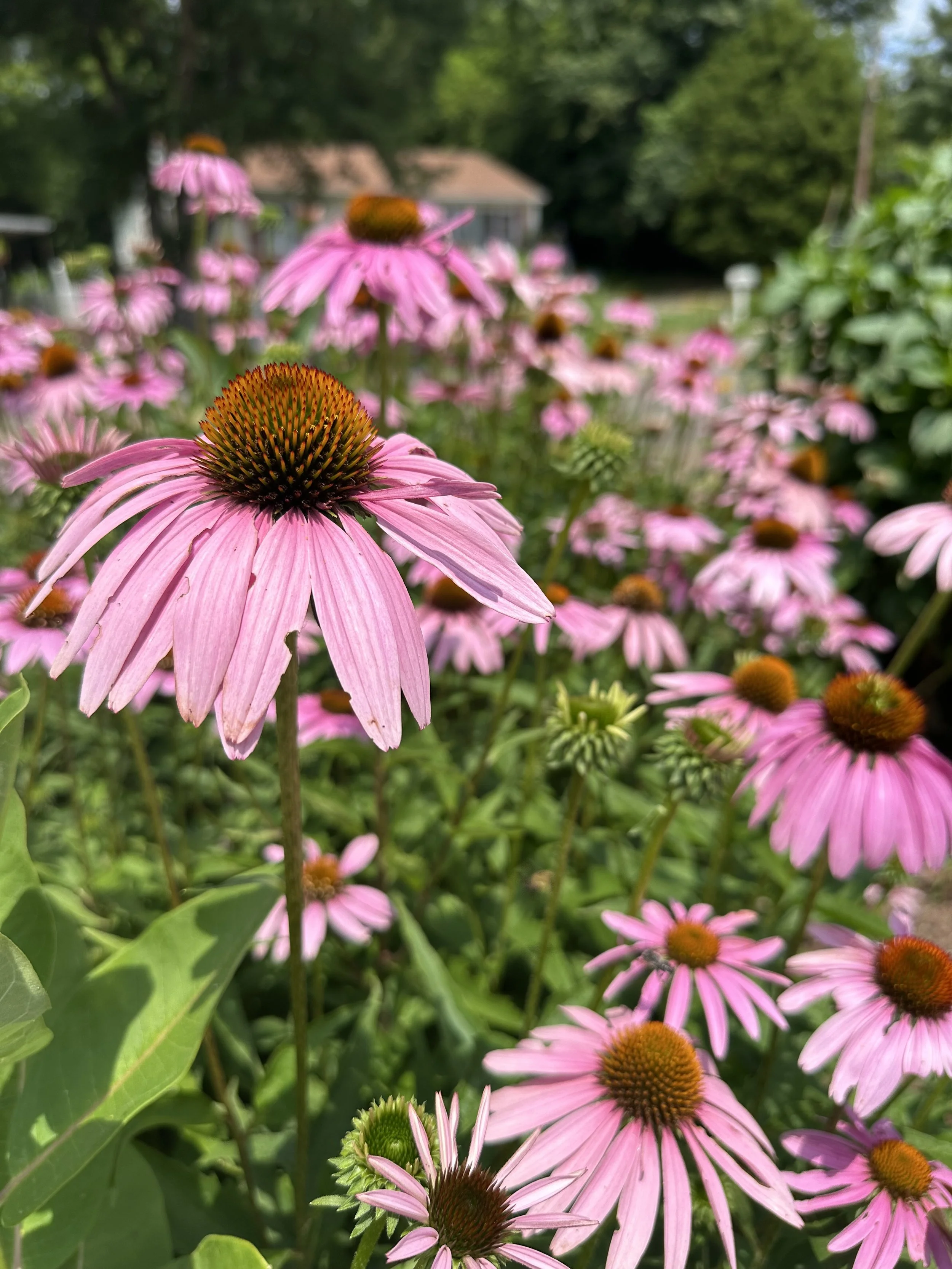
Plant more natives! Native plants are super important for pollinators because most of the animal/insect species in our area have evolved over millions of years with the plant species. So they are enter-twined and sometimes dependent on each other. Natives come in a range of “purity” if you will. Straight species is what we call plants that are closest to their natural form, ex. Echinacea purpurea. However, sometimes the straight species are hard to find, or they have been worked on genetically to preform better in some way. For those varieties we call them cultivars, ex. Echinacea purpurea ‘Magnus’. No it may not be 100% “pure”, but do not let that detour you! Cultivars or Nativars as hip people call them, are just as good! Honestly, don’t get too caught up in the specifics of it all. Do the best you can and pollinators will thank you! *That also is not to say that non-native species can’t be just as beneficial for pollinators. People will probably have my head for this, but you walk out to our Tree and Shrubs lot in the summer and the plant with the most insect life on it is Butterfly Bush! Times 100. Every time. P.s. we only sell sterile varieties that do not re-seed. Nectar is important too. So, give everyone a chance!
That brings me to my next point, DIVERSITY! Diversity in plant life = diversity in animal/insect life. It is as simple as that. The Landscape Designer in me likes to repeat things, which is totally fine! However, the more different types of plant species you have the better for pollinators. Have mostly natives, with some non-natives sprinkled in and annuals throughout, evergreens to border and tie it all together… viola!
Alternate your bloom times. Have plants that bloom in every season, or as many as you can.
Examples:
Spring- Perennial Geranium, Wild Blue Phlox, Columbine, Candytuft, Vitex, Buttonbush, Viburnum, Serviceberry, Redbud, Rhododendron, Azalea, Alyssum
Summer- Echinacea (Coneflower), Rudbeckia (Black Eyed Susan), Liatris, Monarda (Bee Balm), Mountain Mint, Butterfly Bush, Hydrangea, Hypericum (St. John’s Wort), Clethra (Summersweet), Lantana, Pentas, Zinnias, Helianthus (Sunflower), Cuphea
Fall- Asters, sometimes still Rudbeckia (Black Eyed Susan), Upright Stonecrop Sedum, Little Bluestem grass, Solidago (Goldenrod), Chrysanthemum
Winter- Witchazel, Camellia, Pieris, Star Magnolia, Flowering Cherry, Edgeworthia (Paperbush)
Try to garden as naturally as possible. Many chemical products on the market are toxic to pollinators. Instead of using a chemical to solve your issue, try an herbal remedy… honestly getting rid of weeds? pulling them by the roots is always the best option.
Look for the bloom shape. If you want to attract hummingbirds, look for plants with tubular flowers, such as Salvia, Trumpet Honeysuckle, Trumpet Vine, Cuphea, and Fuchsia. Looking to attract butterflies? Give them a nice landing pad to rest on, such as Pentas, Lantana, Coneflower, Rudbeckia, Butterfly Bush, etc.
When talking about pollinators, it is easy to only think about nectar sources, but you also need to think about HOST PLANTS. Host plants are plants that butterflies use to lay their eggs on. Butterflies pick specific plants that their caterpillars can eat, and for some, they are very few! The above example of our state butterfly the Zebra Swallowtail and the Paw Paw trees are an example, but the most notable of course are the Monarch and Milkweed. Monarch butterflies only lay their eggs on plants in the Asclepias genus (Asclepias tuberosa (Butterfly weed), Asclepias syriaca (Common Milkweed) and Asclepias incarnata (Swamp Milkweed). Therefore, if they cannot find those plants, they cannot reproduce. So, it is very crucial to pay attention to host plants. You can find great lists online, as well as in books, my favorite being the one that got me started in this topic, Bringing Nature Home by Doug Tallamy. He has since written several more books on the topic and all of them are must-reads!
Some of the best plants for Butterflies specifically-
Perennials- many great native plant species
-Gallardia- nectar source for sulphurs, whites, swallowtails, etc.
-Butterfly Weed (Asclepias tuberosa)- nectar source for monarchs, swallowtails, coppers, fritillaries, hairstreaks, spring azures, etc. Host plant for cycnia tiger moth, monarch and queen butterflies.
-Milkweed (Asclepias syriaca or incarnata)- nectar source for Monarch, Coral Hairstreak, Striped Hairstreak, Edward’s Hairstreak, Banded Hairstreak, Acadian Hairstreak, Eastern Tailed-Blue, Black Swallowtail, Tiger Swallowtail, Spicebush Swallowtail, Checkered White, American Copper, Great Spangled Fritillary, Pearl Crescent, Silver-Spotted Skipper. Primary host plant for monarch.
-Goldenrod (Solidago)- nectar source for coppers, sulphurs, pearl crescent, gray hairstreaks, monarch, giant swallowtails, fritillaries, clouded sulphurs, etc. Host plant for balitmore and silvery checkerspot.
-Aster- nectar source for monarchs, buckeyes, skippers, painted ladies, pearl crescents, sleepy oranges, spring azures, etc. Host plant for: Dog Face Sulphur, Orange Sulphur, Clouded Sulphur, and Eastern Tailed-Blue.
-Joe Pye Weed- nectar source for monarchs, skippers, fritillaries, swallowtails, red spotted purples, etc.
-Ironweed- nectar source for fiery skipper, monarch, swallowtails, and more. Host for the American lady
-Blazing Star (Liatris spicata)- nectar source for eastern commas, monarchs, fritillaries, swallowtails, painted ladies, skippers, etc.
-Coreopsis- nectar source for smaller butterflies such as skippers, whites, buckeyes, painted ladies, viceroy, eastern tailed blue, gulf fritillary, etc. Host plant for silvery checkerspot buckeye.
-Purple Coneflower (Echinacea purpurea or tenneseeinsis)- nectar source for monarchs, swallowtails, painted ladies, fritillaries, etc.
-Upright Stonecrop (Sedum)- nectar source for painted ladies, buckeyes, gray hairstreaks, monarchs, pearl crescents, pepper and salt skippers, silver spotted skippers, fritillaries, etc.
-Black Eyed Susan (Rudbeckia) – nectar source for monarchs, swallowtails, etc. Host plant for the bordered patch and gorgone checkerspot butterflies.
-Bee Balm (Monarda) – nectar source for checkered whites, fritillaries, Melissa Blues, swallowtails, etc.
-False Indigo Bush (Baptisia)- nectar source for Orange sulphur, clouded sulphur, eastern tailed-blue, etc. Host plant for: dog face sulphur, orange sulphur, clouded sulphur, eastern tailed-blue, hoary edge, elfin, wild indigo duskywing, and black spotted prominent moth.
-Yarrow (Achillea) – nectar source for Coppers, hairstreaks, skippers, etc.
-Maypop/Passionflower vine- host plant for many fritillary butterflies
-Sedge (Carex)- primary host for Appalachian brown butterfly
-Violets- native Corsican violets often found in yards are hosts for great spangled, meadow, and variegated fritillary butterflies
-Clover- primary host for eastern tailed blue and common sulfur, alternate host for the cloudless giant sulphur
-Little / Big Bluestem Grass- host plant for dusted and swarthy skipper
-Trumpet Vine (Campsis radicans)- host for the trumpet vine sphinx moth
-Virginia Creeper- host for the Virginia creeper sphinx and white –lined sphinx moth
-Dutchman’s pipevine- primary host for the pipevine swallowtail
Herbs- not just food for us!
-Dill- host plant for black swallowtail
-Tarragon- host plant for swallowtails
-Common Hops (Humulus lupulus) – host plant for Gray Hairstreak, Question Mark, and Red Admiral
-Lovage- host plant for black swallowtail
-Mint- attracts cabbage white. Host for the hermit sphinx moth.
-Oregano- host plant for pearl crescent and hairstreaks
-Parsley- host for black and anise swallowtail
-Rue- host for black and giant swallowtail
-Salvia- attracts sulphur and swallowtail
-Fennel- host for black swallowtail, anise swallowtail, and more!
Trees and Shrubs – the foundations of any garden
-Oaks- support over 500 different species of Lepidoptera (butterflies and moths), alternate host for gray hairstreak
-Maples- support almost 300 species of Lepidoptera including the rosy maple moth and giant leopard moth
-Willows- host for Viceroy, alternative host plant for tiger swallowtail, support over 400 types of Lepidoptera
-Hackberry- primary host for Hackberry, Hickory Hairstreak, Snout Butterfly, alternate for Mourning cloak and Question mark
-Paw Paw- primary host for Zebra swallowtail (state butterfly!)
-Birches- Host for the Luna Moth, alternative host plant for tiger swallowtail, support over 400 species of Lepidoptera
-Tulip Poplar- primary host for tiger swallowtail and state tree, support almost 400 species of Lepidoptera
-Buttonbush- Nectar source for skippers, monarchs, and more. Host plant for the Titan sphinx moth, hydrangea sphinx and royal walnut moth
-Blueberry- support over 300 species of butterflies and moths including the brown elfin and huckleberry sphinx
-Clethra- attracts swallowtails, hairstreaks, fritillaries, and more.
-Spicebush- only host plant for the spicebush swallowtail!
-Elderberry- attracts monarchs, summer azure, red admiral, danaus plexippus, etc. Host for many species but most notably the cecropia moth.
-Meadowsweet (Spiraea)- great nectar source and host for the spring azure butterflies
-New Jersey Tea- nectar source for many butterflies. Host plant for the spring azure.
-Bluebeard (Caryopteris)- attracts swallowtails, monarchs, sulphurs, skippers, etc.
-Ninebark- attracts swallowtails, pearl crescent, eastern comma butterfly and more.
-Viburnum- good early nectar source for swallowtails, viceroy, red admiral, painted lady, hairstreaks, peacock, malachite, and more. Host plant to many species including the Holly Blue Butterfly, silmoths, sphinx moths and the hummingbird clearwing moth.
-Fringe Tree (Chionanthus virginicus)- host for Fawn and Rustic sphinx moth
Annuals- long bloom times mean lots of nectar!
-Lantana- nectar source for Monarch, long-tailed skipper, clouded skipper, cloudless sulphur and more
-Zinnia- good nectar source for many butterflies including skippers, late bloomer
-Celosia- good nectar source for many butterflies
-Marigolds- good nectar source for many butterflies including American lady
-Verbena- good nectar source for many butterflies
-Heliotrope- good nectar source for many butterflies, sweet-scented and landing-pad shaped blooms
-Pentas- a butterfly favorite, landing-pad shaped blooms
-Sunflowers- variety of cultivars, late season blooms, large landing pad